
Start with two buckets. Durability and warmth. Let’s break it down. Durability means the rack holds a weekend’s worth of seasoned hardwood without flexing, shrugs off dents from log ends and tools, resists winter entryway moisture, and keeps joints tight after years of loading. Warmth comes from what the piece adds to the room. Wood grain and round edges feel inviting. Metal looks clean and modern, but it can look cold if you ignore finish and form.
For daily use, steel or wrought iron often wins on durability. Here is why. Look for welded frames, not bolt-together only, and tubing in the 14 to 16 gauge range for everyday loads. Powder-coated steel resists scratches and light rust better than plain paint. Add capped or rubberized feet so you do not leave rust rings on tile or wood floors. True wrought iron is tough and heavy, but it still needs a protective finish. In damp mudrooms, a zinc primer under the powder coat helps.
Wood changes the feel. Solid hardwood like oak, ash, or maple can handle side panels or a base shelf if thickness is 0.75 inch or more. Ease the edges so they do not splinter. Seal all faces and edges with polyurethane or hardwax oil to limit swelling. Bamboo is hard in strand-woven form but can telegraph humidity changes if end grain is unsealed. MDF is the weak link. It sags under point loads and swells with little moisture. Skip it for shelves or frames.
Common mistakes and fixes:
Next steps. If you want durability with a warmer look, pair a metal frame with softer cues. Choose matte or textured finishes, rounded tubing, a solid wood base panel, or a woven kindling basket. That mix fits rustic or farmhouse rooms and still holds up to real use.
Powder coat, anodizing, or sealed oil finishes reduce the metallic chill and add corrosion resistance, extending service life. Removable sleeves, edge trims, and feet made from elastomers break thermal bridges and protect surfaces. In damp or unheated rooms, choose galvanized or stainless components for durability and pair them with warmer-touch add-ons where people interact. Reassess seasonally so materials and finishes stay aligned with load, humidity, and comfort needs.
Closed tubular sections and perforated shelves can maintain stiffness while limiting large cold surfaces that sap warmth. Thicker gauge improves durability, but it also increases thermal mass, so pair it with smaller contact patches where hands or fabrics rest. Strategic use of wooden slats or polymer caps at touch zones softens the thermal feel without compromising the frame. Validate joint methods (welds, bolts) for both load cycles and the temperatures your space sees.
Metals like steel and aluminum deliver long-term rigidity, but their high conductivity can make racks feel cold and pull warmth from nearby textiles. Hardwoods and composite laminates offer a warmer touch yet may dent or creep under sustained loads. A hybrid approach—metal frame for structure, wood or polymer contact points—balances durability with a friendlier temperature feel. Match species, alloy, and section thickness to your typical load and room conditions.
Let’s break it down. Metal holds up for racks that see real use. Thick-gauge steel tubing or flat bar with full welds carries heavy loads with little flex. The frame stays square and stable season after season. Wrought iron adds hand-forged rigidity at the joints and real weight. That helps when kids bump the rack or you stack a weekend’s worth of splits. If you like an heirloom look, wrought iron wins.
Finish matters more than people think. Here is why. A polyester or hybrid powder coat resists rust, scuffs, and ash better than rattle-can paint. In damp mudrooms, an e-coat underlayer with a baked-on powder topcoat slows corrosion. Textured black hides scratches from rough bark. Satin shows fewer fingerprints than gloss. Plan for contact points: logs dragged across edges will mark paint on any metal, so add edge guards or load rather than slide. Use felted or rubber feet to protect hardwoods and tile. Ask for ground-smooth welds so kindling bags and sweater sleeves don’t snag. In coastal or high-humidity homes, look for zinc-rich primers under the powder and use stainless fasteners on mixed-material builds.
Wood frames bring warmth and a softer touch, but trade durability. Solid hardwood dents and can pick up black ash stains without a durable topcoat. Bamboo is hard and stable, yet glued laminations dislike standing moisture. MDF swells if a snowy log sits on it. If you go wood, seal all faces and edges with a water-resistant finish and add a metal liner or drip tray under the lowest tier.
Common mistakes: choosing thin tubing that flexes, relying on spray paint, skipping floor-protecting feet, and placing wood racks too close to a damp entry. Metal wins for durability; add warmth with textured black, muted colors, or leather wrap on handles.
Choose steel when budget, clean lines, and modular parts matter. Here is why: it weighs less for its strength, and rectangular tubing is easy to find. Jig-welded joints hold geometry, so frames sit flush to walls or hearths. A good powder coat resists scratches and rust better than painted wood, bamboo, or MDF.
Choose wrought iron for a handmade look and a solid feel. Hammered textures, scrolls, collars, and rivets suit rustic or farmhouse rooms. The extra mass softens clatter when you set logs down. Seal a blackened finish with clear lacquer or wax, and spot-treat nicks early to stop rust.
Steel fits tight spaces that need crisp geometry. Jig-welded rectangles line up, so the rack sits flush and preserves stove clearances. Measure log length and mantel height. Shallow racks tip if rounds overhang. Curved wrought iron often projects forward, so allow extra footprint.
Both metals take removable kindling shelves, tool hooks, and log dividers. Pick slotted tabs or threaded inserts; sheet metal screws strip in thin tube walls. Keep shelves narrow to avoid blocking heat and to limit sag. Place hooks outside walkways. Wood racks rarely support these loads.
Plan simple upkeep or the finish fails fast. On steel, wipe, dry, and touch up chips with color-matched enamel before the season. On wrought iron, renew wax or clear lacquer each year and treat orange spots early. Avoid abrasive pads; they cut coatings and speed rust. Next steps: schedule quick checks at the start and end of burn season.
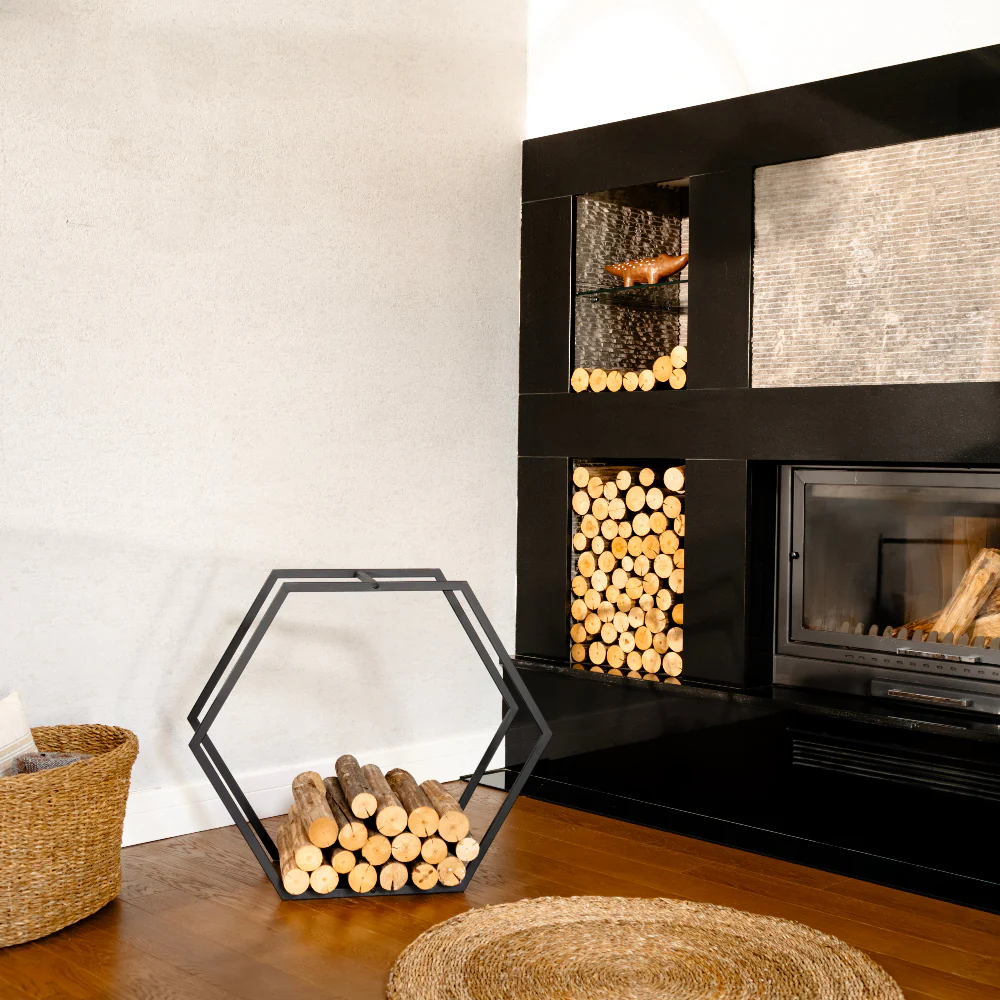
Let’s break it down. Steel or wrought iron frames carry heavy loads with little flex and shrug off bumps. Powder-coated steel resists rust and light scratches better than basic paint. Wrought iron is thicker and often heavier, which boosts stability but can mark floors. Add felt or UHMW pads. If you live with damp winters, pick stainless hardware and a closed-bottom tray. Here is why: meltwater and bark dust should not sit on your floor. Keep any rack and the wood outside your stove’s clearance to combustibles. That distance is usually about 36 inches, per your appliance manual and local code.
Solid wood adds warmth and a softer feel. Pick hardwoods for dent resistance: white oak, maple, ash, hickory, walnut. Softwoods like pine or fir dent easily when you toss splits. Build the frame to resist racking under load. Size through tenons, dowels, or concealed steel brackets correctly, and they hold tight. Finishes affect wear. Hardwax oil looks matte and allows easy spot repairs. Waterborne polyurethane forms a tougher film with better stain resistance to soot and sap. Catalyzed lacquer lasts, but repairs in place take more work. Ease exposed edges to limit chipping, and use strong glides because a full rack concentrates weight on small points. Add a sacrificial metal band or leather wrap where logs hit most. Expect more visible wear over time. Many homeowners like the patina.
Next steps. Bamboo makes a solid middle ground. Strand-woven options feel very hard; seal the end grain. MDF stays consistent and cheap but sags under point loads and swells with moisture. If you must use it, go 1 inch thick, add mid-span supports, and keep damp rounds off it. Skip MDF near stoves or wet entryways. For bare steel, check powder coat quality and touch up chips fast to stop corrosion halos under the finish.
Choose strand-woven bamboo when you want a tough surface that still feels warm. Let’s break it down. This material is dense and hard, often around 3000 lbf on the Janka scale, so it shrugs off dents better than oak or maple. The clean, uniform look suits modern and Japandi rooms that avoid heavy knots or rustic grain. Use engineered bamboo panels or laminations for shelves and sides. They stay flatter and more consistent than random solid boards.
For heavy daily use, build on metal. Here is why. A steel or wrought iron frame carries the load and resists racking. A powder coat adds scratch and rust resistance if the rack sits near damp boots or a snowy entry. Then let bamboo handle the parts you touch: shelf decks, side cladding, top cap. A small living room rack can hold 150 to 200 pounds of seasoned hardwood. Bamboo alone can hold kindling and a few splits, but for bigger stacks add hidden steel angle or tube under the shelves.
Get the details right or you will see problems. Next steps. Seal every cut edge to block moisture swelling. Pick a UV-stable finish so the color won’t amber by a sunny hearth. Confirm the adhesive grade on panels. E0 or E1 with low VOC suits indoor air. MDF tempts on price, but it swells fast if a log tracks in meltwater. Solid wood works, but expect seasonal movement. Keep maintenance simple: wipe spills quickly, dust, and refresh oil or a hardwax finish when the surface looks dry or scuffed. Common mistakes include raw edges, cheap urea-formaldehyde panels, and no metal reinforcement under wide spans. Those cause swelling, delamination, and shelf sag.
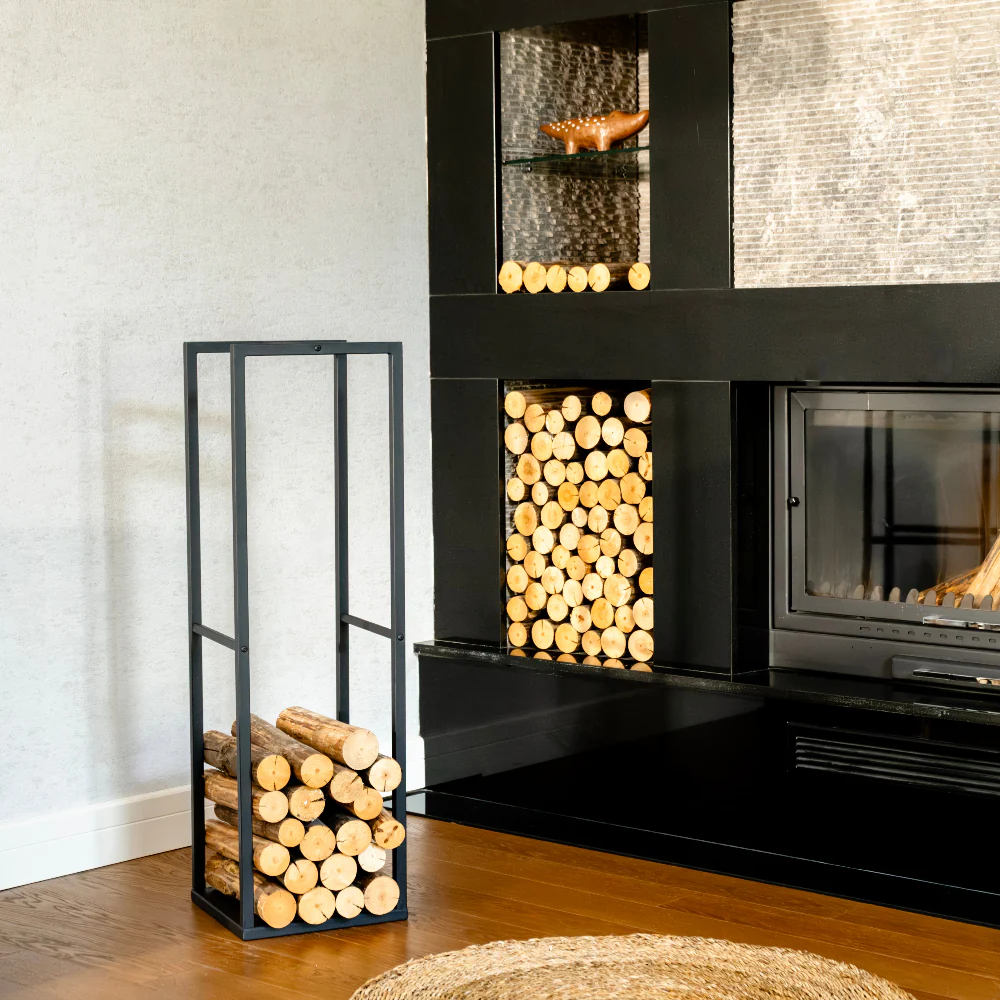
MDF gives clean lines and a paintable surface for an indoor rack, but it cannot carry full-size logs. Treat it as skin, not bone. Use it for side panels, the back, or a small kindling cubby. Leave the main load to a steel or wrought iron frame or solid wood slats.
Here is why: MDF is dense and heavier than plywood for the strength you get. Wide shelves of MDF creep and sag under dense oak or maple. Keep unsupported spans short. Think under 16 inches for anything that carries weight, or add concealed metal battens or hardwood lipping to stiffen the panel. Fasteners can strip in MDF if you over-torque. Pre-drill and use confirmat screws or threaded inserts if you need knockdown parts.
Moisture is the big failure mode. Raw MDF edges wick water from snow-damp logs and wet boots, which causes swelling and a fuzzy edge that never paints well again. Seal every cut edge before assembly with MDF primer, shellac, or diluted PVA, then finish the faces. Add iron-on edge banding or 3 to 6 mm solid lipping anywhere that gets touched or bumped. Raise panels off the floor with metal feet or a drip tray. In a high-traffic, damp entry, choose solid wood or metal instead.
Want a richer look? Walnut or white oak veneer over MDF works, but you still need edge banding and careful sealing. Pick low-VOC MDF labeled CARB Phase 2 or TSCA Title VI, and use waterborne finishes to keep indoor air cleaner. Next steps: use a powder-coated steel frame for structure and durability, and keep MDF as non-structural cladding or a kindling niche. If you want warmth without the vulnerability, choose bamboo or solid hardwood for the parts that touch the logs.
Wet bark, gritty logs, and seasonal humidity stress any rack. Plan for that when you pick materials. You want tough finishes and a warm look that suits the room. Let’s break it down.
These habits prevent rust and keep wood looking warm, so the rack fits rustic, farmhouse, or modern rooms without looking beat up after one season. Next steps: pick finishes, add liners and bumpers, and control moisture.
Let’s break it down. Pick the frame for duty, then add warmth with surfaces. Steel handles daily abuse and holds its shape over time. Powder-coated steel resists indoor humidity and ash. A thicker 14 to 16 gauge tube feels sturdier and dents less than thin stock. Wrought iron is heavier and often hand forged. It shows hammer texture. It takes a blackened patina well. It hides scuffs better than smooth metal. Both metals resist scratches better than softwoods and do not sag under full loads.
Wood changes how the rack reads in the room. Solid white oak, hickory, or rift-cut white oak shelves resist abrasion from bark and log ends. Bamboo is hard, stable, and renewable. It suits modern accents. MDF stays flat but hates moisture, and edges crush easily. Use it only in dry rooms and not for heavy loads. Seal any wood with polyurethane or hardwax oil so tannins and soot do not stain.
Style fit matters as much as strength. Here is why. Rustic rooms take wrought iron with rivets or a blackened finish. Pair with reclaimed oak or hickory shelves. Leather tool loops add tactile warmth. Farmhouse leans to matte black or oil-rubbed bronze steel with gentle curves. Add white oak or painted poplar panels that echo shaker doors and beadboard. Modern favors slim square-tube steel in powder-coated black, charcoal, or ecru. Match with bamboo or rift-cut white oak and clean geometry. Consider an integrated kindling cubby. Hybrids work well. Use a steel frame for structure with a warm hardwood base, or set wood sides inside a metal perimeter.
Color and texture set the visual weight in the space. Charcoal metal calms a bulky silhouette. Light wood brightens winter rooms. Hammered iron reads artisanal. Smooth steel reads architectural. Match finishes to flooring, the mantel, or window trim. Avoid raw steel on tile or stone. It can rust-stain. Next steps. Add rubber feet or brass glides to protect floors, and confirm the rack’s stated capacity before you stack a week’s worth of splits.
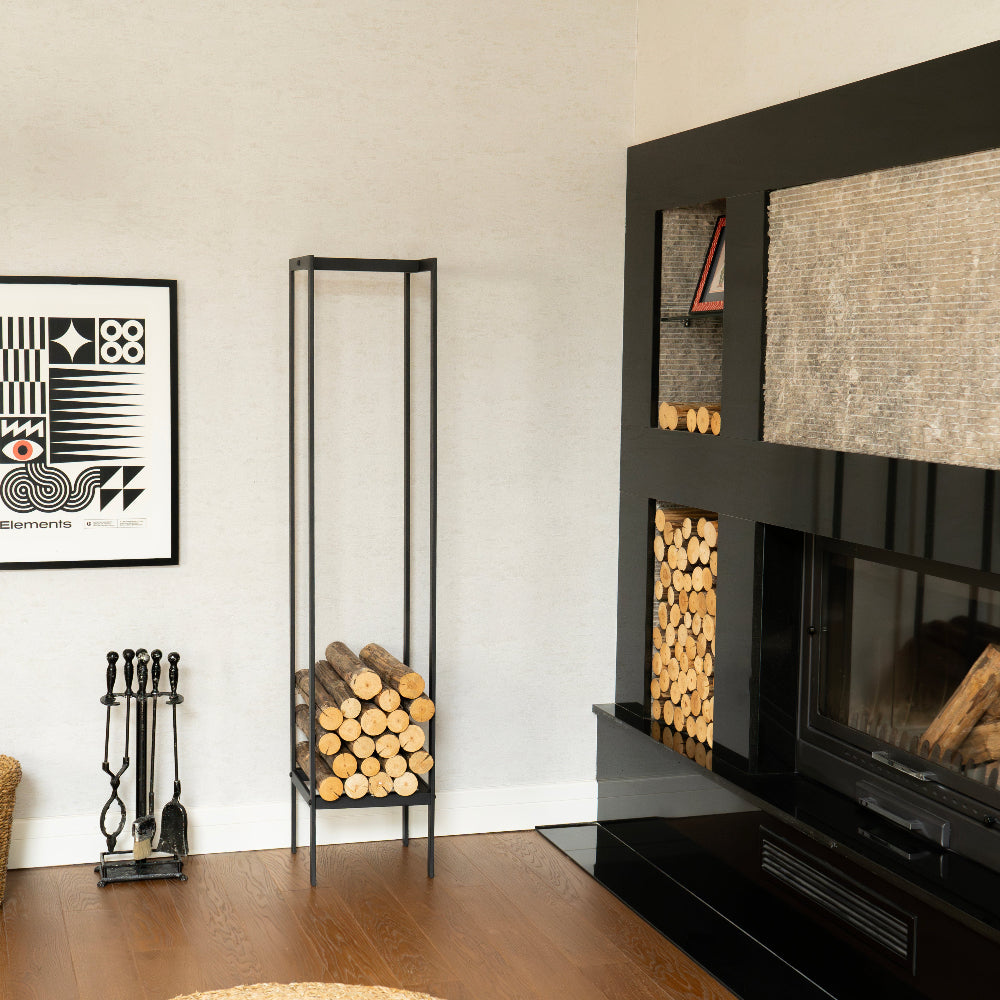
Plan for weight first. Let’s break it down. A compact rack packed with 16-inch hardwood can top 100 lb. Steel or wrought iron handle that load with less flex, so you can keep profiles slimmer. Solid wood works if you size the members up and add cross-bracing to resist racking. Use bamboo panels as skins over a frame, not as the frame. MDF holds screws poorly and swells when thawing snow drips off logs.
Finish matters. Here is why: Powder-coated steel resists rust and daily scuffs; touch up chips with enamel. Stainless handles damp mudrooms but looks more modern. Wood needs a tough clear coat; expect to refinish high-wear edges. Want warmth in a rustic or farmhouse room? Add wood or bamboo accents on a metal frame for balance. For a modern space, a simple welded steel rectangle with tight welds and a matte coat looks clean, and a wood tray keeps it from feeling cold. Next steps:
Let’s break it down. Pick the structure first, then the surface you see and touch. Choose recycled-content steel with a durable powder coat for the frame. It stands up to daily loads and ash. Ask about gauge. 14 to 16 gauge tubing resists dents and flex when you stack 70 to 120 pounds of seasoned wood. A zinc-rich primer under the powder helps if your rack sits near a damp entry. Wrought iron costs more because of handwork and weight. It feels very stiff and fits rustic rooms, but it still needs a protective finish to stop rust from creeping at chips.
For warmth and a quieter set-down, FSC-certified hardwoods like oak or maple work well for sides, shelves, or trim. Use a repairable finish such as hardwax oil. When it scuffs, rub lightly with a non-woven pad and add a small re-oil to blend it in. Skip glossy poly on contact edges. Once it chips, you must strip larger areas. Bamboo grows fast and holds up well, especially strand-woven panels. Verify low-VOC adhesives and seal cut edges. Re-oil as needed. Use MDF only in low-wear spots like back panels. Choose low-formaldehyde cores that meet CARB Phase 2 or EPA TSCA Title VI. If you put MDF on the base, it wicks moisture and swells, and screws lose bite. Here is why: